Does Cooking Tomato Sauce in Cast Iron Really Add Iron? Here's What Actually Happens
Quick Answer: Cooking acidic, long-simmered foods like tomato sauce in a well-used (not heavily seasoned) cast iron pan genuinely does transfer small amounts of iron into the food — studies have measured meaningful increases, sometimes several times the iron content of the same sauce cooked in stainless steel — but it’s non-heme iron, which the body absorbs less efficiently than the iron in meat or supplements.
The internet claim isn’t a myth exactly, but it’s usually presented with way more certainty than the actual variables deserve.
Is there real research behind cast iron adding iron to food?
Yes — a frequently cited study on this exact question found that acidic foods like tomato sauce absorbed significantly more iron when cooked in cast iron versus non-iron cookware, with the increase sometimes measured in multiples rather than small percentages. The effect is real and reproducible, not just kitchen folklore.
What actually determines how much iron transfers?
Three factors matter most: acidity (tomato sauce, citrus-based dishes, and vinegar-heavy recipes leach more iron than neutral-pH foods), cook time (a quick 5-minute sauté transfers far less than a 30-45 minute simmer), and pan seasoning (a heavily seasoned, well-built-up cast iron surface transfers noticeably less iron than a newer or more stripped-down pan, since the seasoning layer acts as a partial barrier between the iron and the food).
Is the iron picked up this way actually well absorbed by the body?
It’s non-heme iron, the plant-based form that the body absorbs at a lower rate than the heme iron found in meat, poultry, and fish — typically in the single-digit percentage range without help, compared to a notably higher absorption rate for heme iron. Pairing the cast-iron-cooked dish with a source of vitamin C, which tomato sauce conveniently already has some of, further improves how much of that iron actually gets absorbed.

Does this mean cast iron cooking can meaningfully help someone with low iron?
It can be a small, genuinely helpful contributor alongside iron-rich foods and, when needed, supplementation — but it shouldn’t be relied on as a primary strategy for addressing a diagnosed iron deficiency. Think of it as a modest bonus layered onto an already iron-conscious way of cooking, not a replacement for it. Someone already eating iron-rich foods regularly and simply looking for small additional gains is a better fit for leaning on this trick than someone managing a confirmed deficiency who needs a more reliable, measurable intervention.
Does it matter whether the tomato sauce is homemade, canned, or jarred?
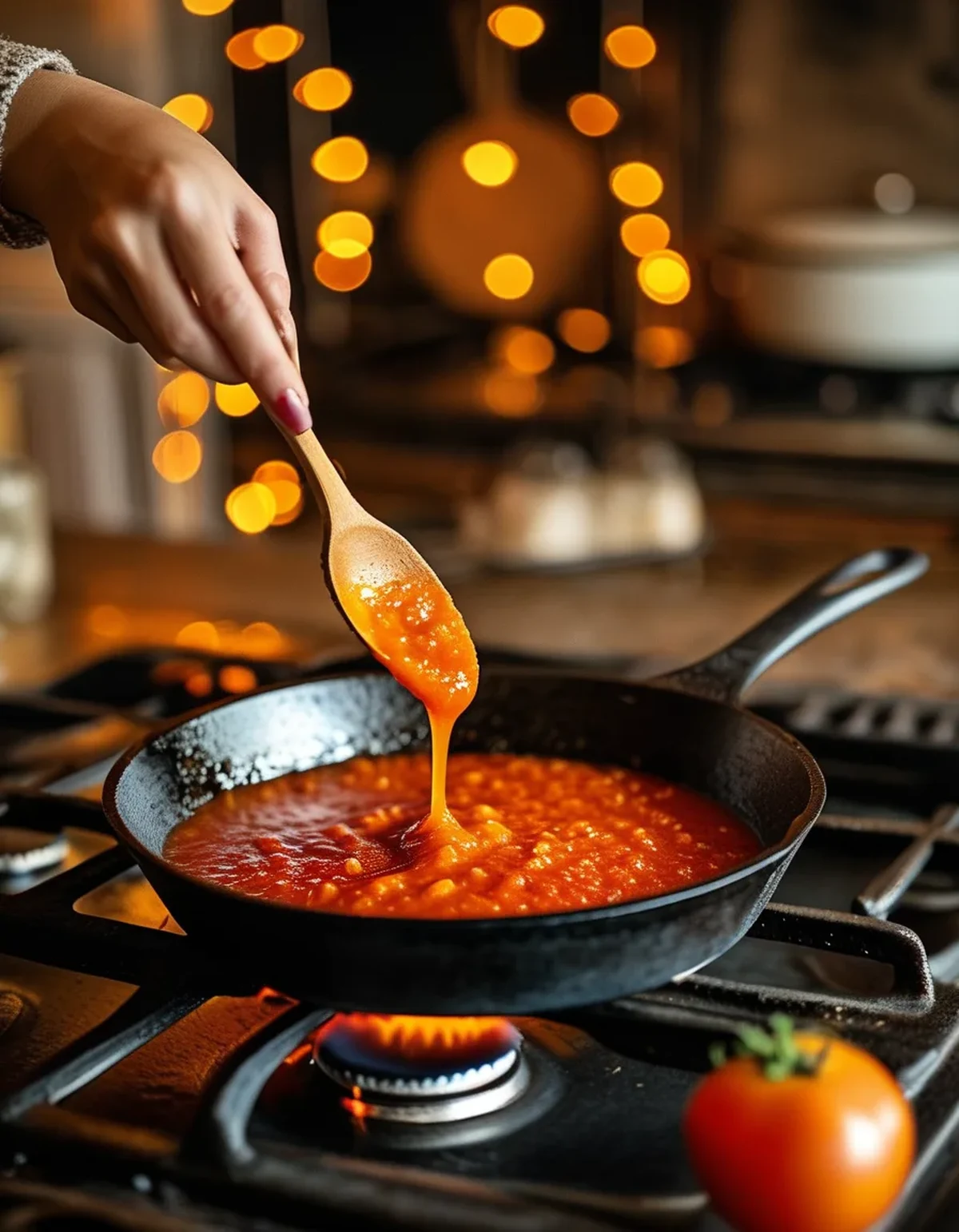
Somewhat — a homemade sauce simmered for 30-45 minutes on the stovetop in the actual cast iron pan gets the full benefit of both acidity and extended cook time working together. A jarred sauce reheated briefly in cast iron for just 5-10 minutes still picks up some iron from the acidity, but noticeably less than a long homemade simmer, since cook time in direct contact with the iron surface is doing a large share of the work.
Canned tomatoes used as a base for a longer-cooked dish (a chili, a braise) fall somewhere in between — the extended total cook time matters more here than whether the tomatoes started canned or fresh.
Myth vs Fact: Cast Iron and Iron Content
Myth: Any food cooked in cast iron picks up a meaningful amount of iron. Fact: Neutral-pH foods cooked briefly (a quick stir-fry, a fried egg) transfer very little iron compared to acidic, long-simmered dishes — the effect is highly dish-dependent, not automatic.
Myth: A well-seasoned cast iron pan is better for iron transfer than a newer one. Fact: It’s actually the opposite — a heavier seasoning layer partially shields the food from direct contact with the iron surface, meaning a newer or lightly seasoned pan can transfer more.
Myth: This makes cast iron a substitute for iron supplements in true deficiency. Fact: The amounts involved are meaningfully smaller than a therapeutic supplement dose — useful as a small daily contributor, not a treatment.
FAQ: Cast Iron Cooking and Iron Content, Answered
Does simmering soup or chili in cast iron have the same effect as tomato sauce?
Somewhat, if there’s tomato or another acidic base involved — the acidity is doing most of the work, so a neutral broth-based soup will see less of an effect than a tomato-forward chili.
Is there a risk of getting too much iron this way?
For most people, no — the amounts involved are modest, though people with hemochromatosis or other iron-overload conditions should be more cautious about all iron sources, including this one, and should check with a doctor.
Does stainless steel cookware add any iron at all?
Minimal to none in most cases — the iron transfer effect is specific to cast iron’s exposed, reactive iron surface, which stainless steel’s coating doesn’t share.
TL;DR:
- Long-simmered, acidic dishes like tomato sauce genuinely pick up measurable iron from cast iron
- Cook time, acidity, and pan seasoning level all change how much transfers
- It’s non-heme iron, absorbed less efficiently than meat-based iron, but vitamin C pairing helps
- It’s a small daily bonus, not a substitute for addressing a real iron deficiency
The cast iron and tomato sauce trick is one of the rare kitchen claims that actually holds up under real research — just don’t expect it to do more than it realistically can.
Keep Reading
This article is for general informational purposes only and is not medical advice. Always consult a qualified health professional for guidance specific to you.