Why Your Iron Test Comes Back Different Depending on When You Took It
Quick Answer: Serum iron follows a daily rhythm and is typically highest in the morning, falling substantially by evening - swings of 30 percent or more within one day are normal. Ferritin is an acute-phase protein that rises with infection, inflammation, and hard training, which can mask genuine deficiency. Test fasted in the morning, at least 24 hours after hard training, and not within two weeks of any illness.
Your result said normal, and you still feel exactly the same as you did before the test.
Before concluding that iron is not your problem, it is worth knowing how much the number moves depending on the morning you happened to book.

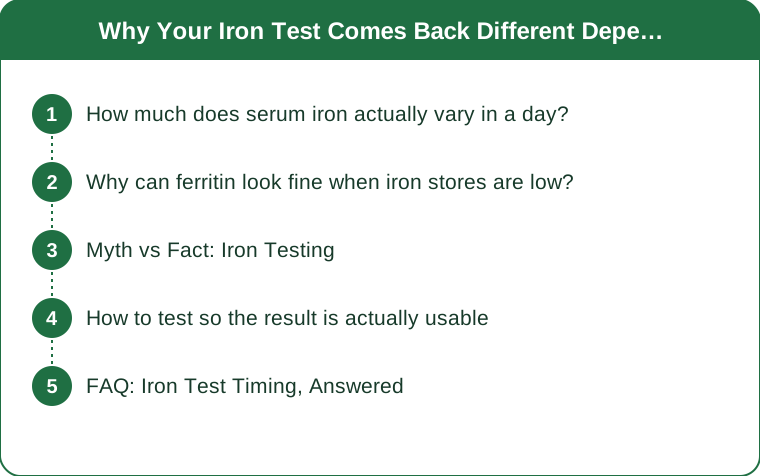
How much does serum iron actually vary in a day?
A great deal. Serum iron follows a circadian pattern, generally peaking in the morning and declining through the day, and the difference between a morning and evening draw in the same person can exceed 30 percent.
That is more than enough to move a result from the lower end of normal to below range, or the reverse, with nothing at all having changed about your iron stores.
Recent meals move it too. A meal containing iron raises serum iron for hours afterwards, which is why fasting samples are the standard for this test rather than an inconvenience someone invented.
Iron supplements dramatically inflate it. Taking a supplement within 24 hours of the draw can produce a serum iron result that looks healthy while your actual stores remain depleted.
This is precisely why serum iron alone is a poor test. It is a snapshot of what is circulating right now, not a measure of what you have stored, and it should always be read alongside ferritin and transferrin saturation.
The practical takeaway is not to distrust testing. It is to standardise the conditions so that two tests months apart are actually comparable to each other.
Why can ferritin look fine when iron stores are low?
Ferritin is your storage marker and it is also an acute-phase reactant, which means it rises in response to inflammation regardless of how much iron you have.
Infection, injury, chronic inflammatory conditions, obesity, liver issues, and intense exercise can all push ferritin up. A person with genuinely depleted stores can test in the normal range while fighting a cold.
Hard training is the version that catches athletes. A demanding session raises inflammatory markers for 24 to 72 hours, and ferritin can follow, producing a comfortable-looking number in someone who is actually deficient.
This is why a normal ferritin with clear deficiency symptoms deserves a second look rather than a full stop. CRP is the standard companion test - if CRP is elevated, your ferritin is inflated and needs interpreting rather than accepting.
The reference ranges themselves are a separate problem. Many labs report ferritin as low as 15 ng/mL as normal, while symptom resolution in fatigue studies often requires levels well above that. Being technically in range is not the same as being replete.
Ask for the actual number, not the interpretation. A ferritin of 16 and a ferritin of 90 both print as normal and describe completely different situations.

Myth vs Fact: Iron Testing
Myth: a normal result rules iron out. Fact: normal ranges are wide, ferritin can be falsely elevated by inflammation, and being at the very bottom of a range is not the same as being replete. The number matters more than the label.
Myth: the time of day does not matter for blood tests. Fact: it matters a great deal for serum iron specifically, with swings above 30 percent across a day. Morning fasted is the standard for good reason.
Myth: you should keep taking your supplement before a test so it shows properly. Fact: the opposite - supplements within 24 hours inflate serum iron and can hide the deficiency you are trying to detect. Most guidance suggests pausing supplements for 24 to 48 hours before testing, though follow whatever your clinician advises.
Myth: one test is enough. Fact: for a marker this variable, the trend across two or three tests under similar conditions tells you far more than any single draw.
Myth: high ferritin always means good iron status. Fact: it can equally mean inflammation, liver stress, or iron overload. Context and CRP decide which.
Myth: haemoglobin covers it. Fact: haemoglobin falls last. You can have fully depleted stores, symptoms, and a perfectly normal haemoglobin - which is exactly the situation that gets missed most often.
How to test so the result is actually usable
Book the morning slot, fasted. First thing, water only. This single change removes the biggest source of variability in serum iron.
Leave at least 24 hours - ideally 48 - after hard training. Both inflammation and plasma volume shifts distort the picture, and endurance sessions do it most.
Wait two weeks after any illness or infection, since acute-phase ferritin elevation can persist well past the point you feel better.
Pause supplements for 24 to 48 hours if your clinician agrees, so you measure your status rather than your last dose.
Ask for the full panel: ferritin, serum iron, transferrin saturation, total iron binding capacity, CRP, and a full blood count. Ferritin alone with no CRP is the most common incomplete picture.
Repeat under matching conditions. Same time of day, same fasting state, same training context. A trend across three comparable tests is worth more than any single number - and if you are supplementing, retest at around three months, since rebuilding stores takes that long even when everything is going right.
Cycle timing is worth considering if you menstruate: testing in the week immediately after a heavy period will show your lowest point, which some clinicians consider useful information and others prefer to avoid. Whichever you choose, keep it consistent between tests.
FAQ: Iron Test Timing, Answered
What time of day should I have an iron test?
Morning, fasted, ideally before 10am. Serum iron peaks in the morning and can fall more than 30 percent by evening, so morning testing is both the standard and the most comparable between repeat tests.
Should I stop my iron supplement before testing?
Usually for 24 to 48 hours, but ask your clinician since it depends on what they are trying to measure. Testing while supplementing measures your dose, not your stores.
Can hard training make my iron test look better than it is?
Yes. Training raises inflammatory markers for 24 to 72 hours and ferritin can rise with them, masking depletion. Leave at least 24 hours, preferably 48.
Why is my ferritin normal if I have every symptom?
Either inflammation is inflating it - check CRP - or you are technically in range but at the bottom of it, which is common and frequently symptomatic. The number matters, not the word normal.
How often should I retest?
Around three months after starting supplementation, since that is how long stores take to rebuild. For monitoring without treatment, every six to twelve months is typical.
Does my menstrual cycle affect the result?
It can, particularly with heavy periods. The week after a heavy period shows your lowest point. Whichever timing you use, keep it consistent so the tests are comparable.
Is haemoglobin enough on its own?
No. Haemoglobin falls last, after stores are already depleted. Ferritin is the earlier and more useful marker. This is general information, not medical advice - discuss your results with your doctor.
TL;DR:
- Serum iron follows a daily rhythm and can swing over 30 percent between morning and evening in the same person.
- Ferritin rises with inflammation, infection, and hard training, so it can look normal while stores are genuinely depleted.
- Test morning, fasted, at least 24 to 48 hours after hard training, and not within two weeks of illness.
- Ask for the full panel including CRP - ferritin without CRP is the most common incomplete picture.
- Haemoglobin falls last, so a normal haemoglobin does not rule out deficiency.
Standardise the conditions and compare trends across tests. This is general information, not medical advice.
Keep Reading
This article is for general informational purposes only and is not medical advice. Always consult a qualified health professional for guidance specific to you.