Why Iron-Deficient Hands and Feet Stay Cold Even in Summer
Quick Answer: Iron carries oxygen through your blood, and low iron forces your body to prioritize your core organs over your extremities — hands and feet run cold as a direct result, even in warm weather. If this pairs with fatigue or pale nail beds, it’s worth a blood panel, not just more layers.
You’ve blamed the office AC, then your circulation, then just “being a cold person” — but it’s the middle of July and your fingers still feel like they belong to someone standing outside in January. That specific pattern, warm room and cold hands, points somewhere more specific than room temperature.

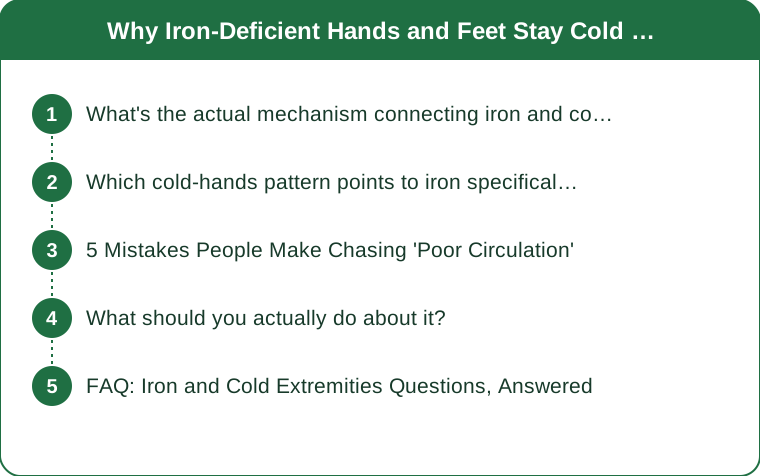
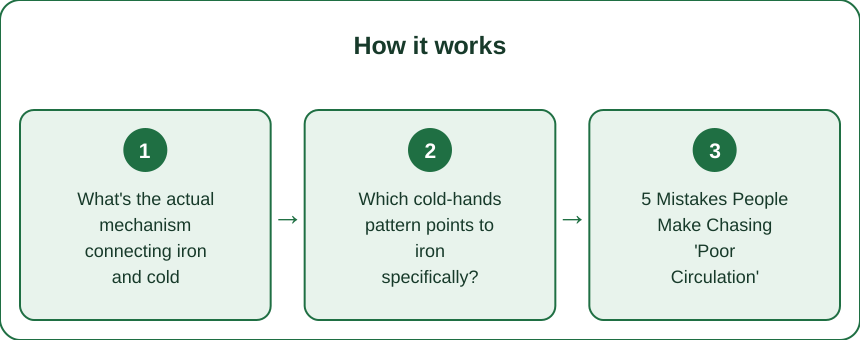
What’s the actual mechanism connecting iron and cold extremities?
Iron is the core component of hemoglobin, the molecule that carries oxygen through your blood. When iron runs low, your body makes a triage decision: it shunts blood flow toward your heart, lungs, and brain, and away from your hands and feet.
That’s not a metaphor — it’s measurable vasoconstriction in the extremities, and it’s why iron-deficient hands and feet can run noticeably colder than the rest of the body even in a warm room.
Which cold-hands pattern points to iron specifically?
Not all cold hands are the same. The iron pattern usually includes:
- Cold that persists regardless of room temperature
- Paired with fatigue that doesn’t match your sleep
- Pale or bluish nail beds, sometimes spoon-shaped nails in more advanced cases
- Shortness of breath on stairs that didn’t used to wind you
Cold hands alone, with none of the above, is more likely just circulation or Raynaud’s — a different issue worth its own conversation with a doctor.

5 Mistakes People Make Chasing ‘Poor Circulation’
1. Only treating the symptom. Warmer gloves fix nothing if the cause is oxygen delivery, not insulation.
2. Assuming it’s just genetics. Family history of ‘always being cold’ sometimes means family history of undiagnosed low iron, especially in women.
3. Skipping the blood panel. Ferritin (stored iron) is the number that actually matters — hemoglobin alone can look normal while ferritin is already low.
4. Loading up on iron supplements without testing first. Excess iron has its own risks; test before you supplement.
5. Ignoring the fatigue that comes with it. Cold hands are the visible symptom; fatigue is usually the bigger, quieter one.
What should you actually do about it?
Start with food: red meat, lentils, spinach with vitamin C, and fortified cereals are reliable everyday sources. Pair iron-rich meals with vitamin C (citrus, bell peppers) to roughly triple absorption, and avoid coffee or tea within an hour of iron-heavy meals — tannins block uptake significantly.
If cold hands persist alongside fatigue for more than a few weeks, ask for a ferritin test specifically, not just a standard CBC, since ferritin catches early depletion before hemoglobin drops.
FAQ: Iron and Cold Extremities Questions, Answered
Can iron deficiency cause cold hands without anemia?
Yes — ferritin (stored iron) can be low before hemoglobin drops enough to count as anemia. This early stage still causes symptoms.
Is this different from Raynaud’s disease?
Raynaud’s causes color-changing episodes (white, then blue, then red) usually triggered by cold or stress, and can coexist with iron issues but has a different root cause.
How long until iron correction warms things up?
With consistent dietary iron and confirmed absorption, most people notice improvement in 6-8 weeks — this is general information, not medical advice, so confirm with bloodwork rather than guessing.
TL;DR:
- Low iron triggers blood flow triage away from hands and feet toward core organs
- The tell is cold regardless of room temperature, paired with fatigue or pale nail beds
- Ask for a ferritin test specifically — hemoglobin alone can miss early depletion
- Pair iron-rich food with vitamin C, skip coffee/tea within an hour of those meals
Cold hands in a warm room is a specific enough pattern to take seriously — this is general information, not medical advice.
Keep Reading
This article is for general informational purposes only and is not medical advice. Always consult a qualified health professional for guidance specific to you.