Why Recovery Feels So Much Harder When Your Iron Is Low
Quick Answer: Iron is essential for transporting oxygen to muscles, so low levels reduce how efficiently muscles recover and rebuild after exercise, often showing up as unusually prolonged soreness, persistent fatigue, and workouts that feel harder than they should relative to effort. Addressing intake of iron-rich foods, paired with vitamin C for absorption, is the primary practical fix.
If recovery has started feeling disproportionately hard compared to your actual training load, iron levels are worth considering before assuming it’s just overtraining.

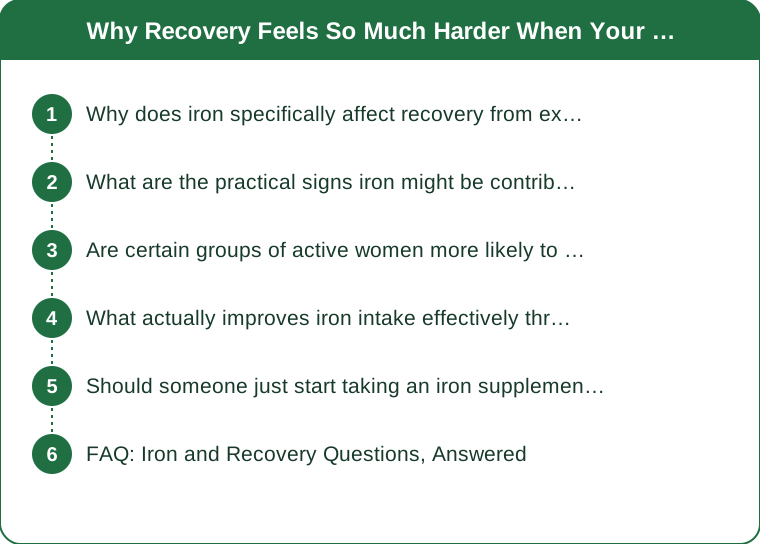
Why does iron specifically affect recovery from exercise?
Iron is a core component of hemoglobin, which carries oxygen from lungs to working muscles — when iron is low, oxygen delivery to recovering tissue is less efficient, slowing the repair processes that happen in the hours and days after a workout.
What are the practical signs iron might be contributing to slow recovery?
Soreness that lingers well beyond the usual 24-48 hour window, persistent fatigue that doesn’t improve with rest, and a sense that moderate workouts feel disproportionately taxing are common practical signs, though a blood test is the only way to confirm actual iron status.
Are certain groups of active women more likely to run low on iron?
Women who menstruate, endurance athletes (due to a phenomenon called foot-strike hemolysis in runners), and those following largely plant-based diets without deliberate iron planning are all at higher risk of lower iron levels than the general population.

What actually improves iron intake effectively through food?
Pairing iron-rich foods — red meat, lentils, spinach, fortified cereals — with a source of vitamin C in the same meal significantly improves how much iron the body actually absorbs, since vitamin C converts iron into a more absorbable form.
Should someone just start taking an iron supplement if recovery feels slow?
Not without testing first — iron supplementation without a confirmed deficiency can cause digestive side effects and, in rare cases, contribute to iron overload, so a blood test confirming actual low levels should come before starting a supplement.
FAQ: Iron and Recovery Questions, Answered
How long does it take to notice improved recovery after fixing an iron deficiency?
Most people notice meaningful improvement in energy and recovery within 4-8 weeks of consistently correcting a confirmed deficiency, though full iron store replenishment can take several months.
Can I get enough iron from a vegetarian or vegan diet without supplements?
Yes, with deliberate planning — combining plant iron sources with vitamin C at meals and being mindful of tea or coffee’s inhibiting effect on iron absorption when consumed alongside meals.
Is fatigue always a sign of low iron?
No — fatigue has many possible causes including sleep quality, thyroid function, and general overtraining, so a blood test is the only reliable way to confirm iron is actually the contributing factor before changing diet or supplementation.
TL;DR:
- Low iron reduces oxygen delivery to muscles, slowing recovery specifically
- Lingering soreness and disproportionate fatigue are practical warning signs
- Menstruating women, endurance athletes, and plant-based eaters run higher risk
- Pairing iron-rich foods with vitamin C improves absorption meaningfully
If recovery has quietly gotten harder without a matching increase in training load, iron status is worth checking before assuming it’s just overtraining.
Keep Reading
This article is for general informational purposes only and is not medical advice. Always consult a qualified health professional for guidance specific to you.