The Plant-Iron Playbook: A Full Day of Meat-Free Iron That Absorbs
Quick Answer: Plant iron absorbs poorly on its own, but pairing it with vitamin C dramatically improves uptake. Build each meal around an iron source — fortified oats, lentils, tofu, pumpkin seeds — and add a vitamin C food alongside. Keep tea and coffee at least an hour away from iron meals, and get a ferritin test before assuming you’re deficient.
Plant iron plays hard to get.
The non-heme iron in lentils, tofu, and spinach is absorbed far less efficiently than the heme iron in meat — and vegetarian women carry the highest deficiency odds of any group.
But shy isn’t impossible. With the vitamin C escort service and some scheduling, a completely meat-free day can deliver its iron quota. Here’s the engineered menu.

Breakfast: the fortified launch
Fortified oats with strawberries and pumpkin seeds.
Three things doing three jobs:
The fortified cereal or oats supply added iron in a readily available form — check the label, since fortification levels vary enormously between products. Many fortified cereals deliver a substantial share of the daily target in one bowl.
The strawberries are the escort. Vitamin C converts non-heme iron into a form the gut absorbs far more readily, and the effect is large — studies consistently show vitamin C multiplying non-heme iron absorption several-fold when eaten in the same meal. Strawberries, orange segments, kiwi, or a squeeze of citrus all work.
Pumpkin seeds add roughly 2mg per ounce, plus zinc and magnesium. A tablespoon on top costs nothing in effort.
The coffee waits an hour. Tannins and polyphenols in coffee and tea bind iron and block absorption significantly — one cup with a meal can cut non-heme iron uptake substantially. Move it 60 minutes either side and you lose nothing but the habit of timing.
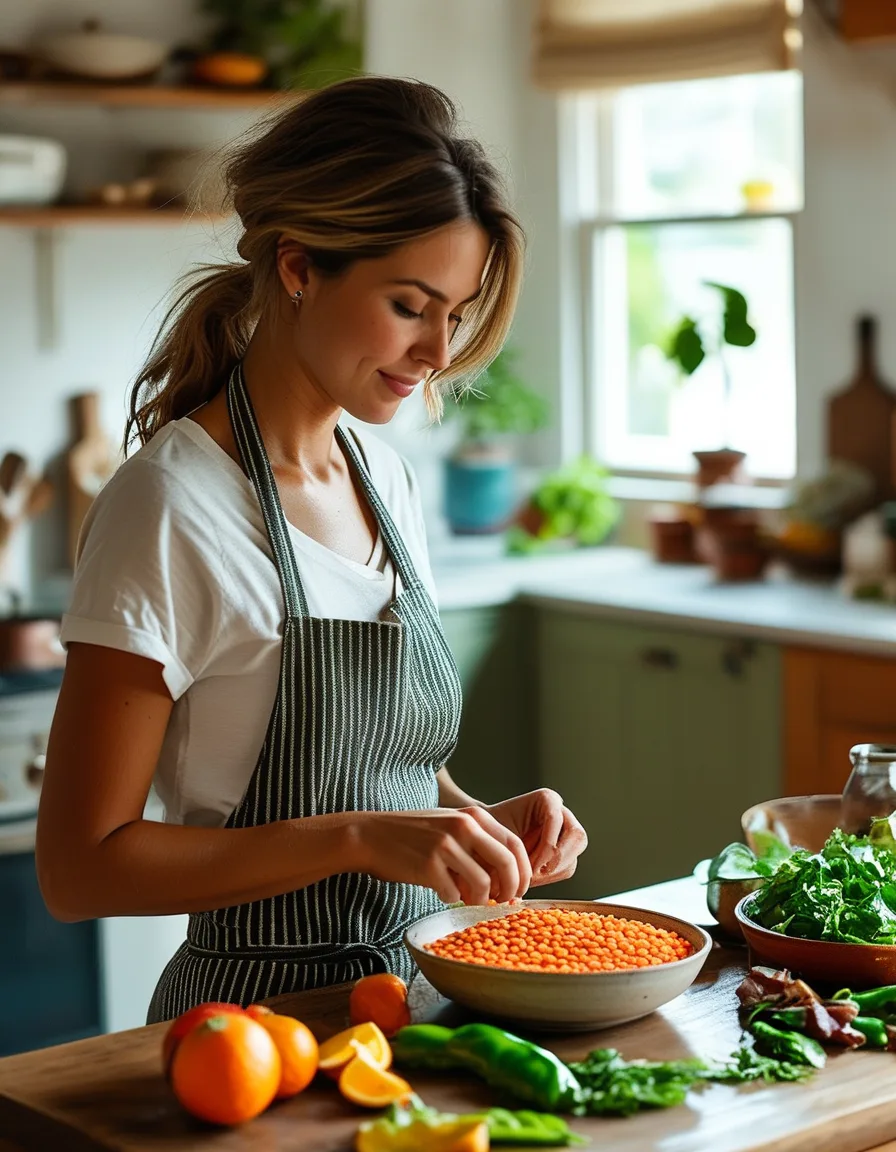
Lunch: the lentil flagship
Lentil salad with roasted red peppers and a lemon dressing.
A cooked cup of lentils carries roughly 6–7mg of iron, which is a meaningful chunk of a daily target in one bowl. That’s the flagship.
Then the double escort: roasted red peppers are one of the highest vitamin C foods there is — higher than oranges by weight — and the lemon dressing adds more. This is absorption engineering disguised as a nice lunch.
Rotate the flagship through the week: chickpeas (about 4.7mg per cup), white beans (about 6.6mg), black beans (about 3.6mg), or edamame. All of them pair naturally with tomato, pepper, citrus, or fresh herbs, which means the vitamin C shows up without planning.
One useful preparation note: soaking and thoroughly cooking legumes reduces phytates, which are the compounds in whole grains and legumes that inhibit iron absorption. Sprouting and fermenting do the same. It’s a reason canned and well-cooked beans often work better than you’d expect.

Dinner: the tofu-greens alliance
Tofu stir-fry with broccoli and a squeeze of lime over rice.
Tofu carries roughly 3–4mg per half-cup serving, depending on how it’s set — calcium-set tofu is common and works fine here, though calcium itself competes with iron, so don’t stack a calcium supplement on this meal.
Broccoli is the self-escorting vegetable, playing both roles at once: it contains iron and a genuinely high amount of vitamin C. Add lime and the escort is doubled again.
The cast-iron accomplice. Cooking acidic foods in a cast-iron pan measurably increases the iron content of the finished dish — the effect is largest with tomato-based sauces and longer cooking times. It’s grandmother technology and it still works. Not a strategy on its own, but a free addition to one you’re already running.
Other strong dinner options in the rotation: a chickpea and tomato curry, a black bean chili, tempeh with peppers, or a spinach and white bean stew. Spinach is worth a caveat — its iron content is real but its oxalate content limits absorption considerably, so it’s a supporting player rather than a flagship.

What blocks iron absorption?
Schedule the blockers around your iron meals rather than trying to avoid them entirely.
The main inhibitors:
- Tea and coffee. The biggest and most fixable. Keep them an hour away from iron-rich meals.
- Calcium supplements and large dairy servings. Calcium competes with iron for absorption. Take supplements at a different meal.
- Phytates in whole grains, legumes, nuts, and seeds. Reduced by soaking, sprouting, fermenting, and thorough cooking.
- Oxalates in spinach, chard, beet greens, and rhubarb.
The main enhancers:
- Vitamin C — by a wide margin the most effective, and the easiest to arrange.
- Cooking in cast iron, especially with acidic ingredients.
- The “meat factor” — not applicable here, but worth knowing it exists if you’re partly vegetarian.
And step one is still a ferritin test. This matters: a plant-focused strategy maintains healthy iron levels well, but it rebuilds an existing deficiency slowly. If your ferritin is genuinely low, food alone may not be enough, and that’s a conversation with a physician about supplementation — not a reason to eat more lentils and hope.
Never start an iron supplement without testing. Excess iron is genuinely harmful and the body has limited ability to excrete it.
5 Mistakes Everyone Makes With Plant Iron
- Coffee or tea with the iron meal. The most common and most costly, and the easiest to fix.
- Skipping the vitamin C pairing. Without it, you’re absorbing a fraction of what’s on the plate.
- Relying on spinach. Popeye was misinformed; oxalates limit what you actually get.
- Taking a calcium supplement alongside dinner. Direct competition. Move it to a different meal.
- Supplementing without a ferritin test. The one that’s actually risky, not just inefficient.
FAQ
How much iron do vegetarians need?
Recommendations for vegetarians are commonly set higher than for meat-eaters — often cited as roughly 1.8 times the standard requirement — precisely because non-heme iron absorbs less efficiently. For menstruating women that means a substantially higher daily target. Your physician can give you a number appropriate to your situation.
What are the highest iron vegetarian foods?
By practical serving: lentils (6–7mg per cooked cup), white beans (~6.6mg), fortified cereals (varies widely, often high), tofu (3–4mg per half cup), chickpeas (~4.7mg), pumpkin seeds (~2mg per ounce), and blackstrap molasses. Pair every one of them with vitamin C.
Can you get enough iron without meat?
Yes, with attention to pairing and timing. Many vegetarians maintain perfectly normal iron levels. The risk isn’t that plant iron is unavailable — it’s that plant iron eaten without vitamin C, alongside a cup of tea, doesn’t deliver what the label implies.
How do I know if my iron is low?
You don’t, without a blood test — the symptoms (fatigue, breathlessness on exertion, cold hands, hair shedding, brittle nails) overlap with many other conditions. Ask for ferritin specifically, not just a standard blood count, since stored iron drops well before hemoglobin does. See a physician if you have persistent fatigue, heavy periods, breathlessness, or unusual cravings for non-food items like ice — and before starting any supplement.
TL;DR:
- Vitamin C is the escort — pair it with every iron meal; the effect is several-fold
- Breakfast: fortified oats, strawberries, pumpkin seeds. Coffee waits an hour
- Lunch: lentils (6–7mg/cup) with roasted peppers and lemon
- Dinner: tofu with broccoli and lime, ideally cooked in cast iron
- Blockers to schedule around: tea, coffee, calcium supplements, oxalates
- Soaking, sprouting, and thorough cooking reduce phytates
- Get a ferritin test first. Food maintains levels well but rebuilds deficiency slowly
Plant iron was never unavailable. It just required an escort, a schedule, and a cast-iron accomplice.
Keep Reading
This article is for general informational purposes only and is not medical advice. Always consult a qualified health professional for guidance specific to you.