Why Cast Iron Cravings and Actual Iron Deficiency Get Confused So Often
Quick Answer: Cooking acidic foods in cast iron does transfer a small, measurable amount of iron into food, but the amount is inconsistent and generally too small to meaningfully treat diagnosed iron deficiency — it’s a minor bonus, not a substitute for dietary iron sources or supplementation when levels are actually low.
The cast iron cooking advice for boosting iron intake circulates constantly, and there’s a real mechanism behind it — but the gap between ‘adds some iron’ and ‘fixes deficiency’ is where a lot of confusion, and some genuinely low iron levels, quietly persist.

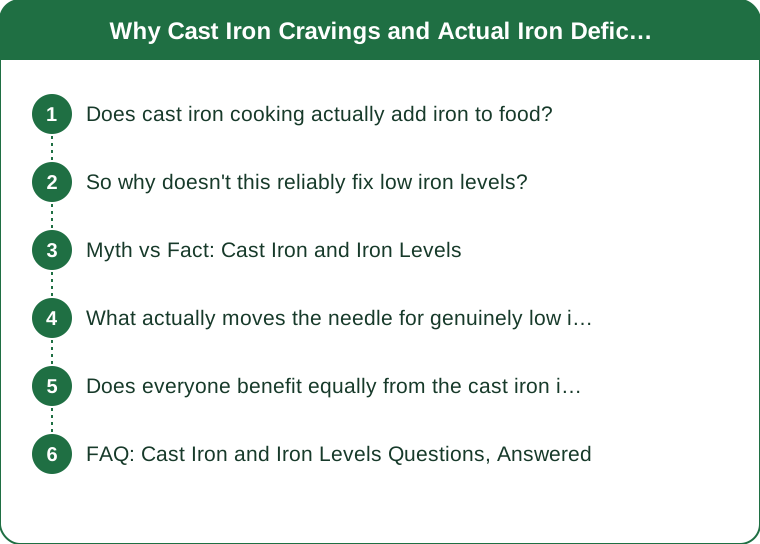
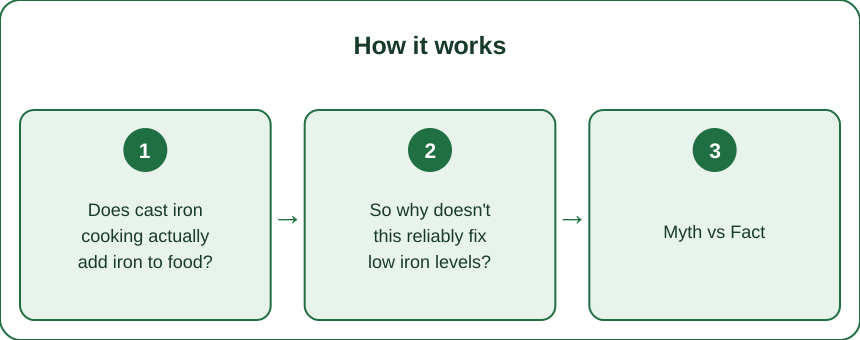
Does cast iron cooking actually add iron to food?
Yes, measurably — acidic foods (tomato sauce, citrus-based dishes, vinegar-based sauces) cooked in cast iron for longer periods do leach small amounts of iron from the pan into the food. Studies measuring this have found real increases in iron content, sometimes multiplying the iron content of a dish several times over compared to the same recipe in a non-reactive pan. The mechanism is genuine chemistry, not folklore.
So why doesn’t this reliably fix low iron levels?
Because the amount transferred is highly inconsistent — it depends on acidity level, cooking time, pan seasoning (a well-seasoned pan transfers less iron, ironically, because seasoning creates a barrier), and food type. A 20-minute tomato sauce might pick up a meaningful amount; a quick sauté of low-acid vegetables picks up next to nothing. There’s no reliable dose, which makes it a poor tool for actually correcting a measured deficiency where consistent, known intake matters.
Myth vs Fact: Cast Iron and Iron Levels
Myth: Cooking everything in cast iron will fix low iron. Fact: The transferred amount is small, inconsistent, and mostly limited to acidic, longer-cooked dishes — it’s a minor supplement to iron intake, not a treatment for diagnosed deficiency.
Myth: The iron from cast iron is the same as dietary iron from food. Fact: It’s a related but different form (largely non-heme iron leached from the pan) with its own absorption characteristics, generally less bioavailable than heme iron from meat sources.
Myth: If you cook in cast iron, you don’t need to worry about iron-rich foods. Fact: Deliberate iron-rich food choices (red meat, leafy greens, legumes, fortified grains) remain the primary lever — cast iron cooking is additive at best, not a replacement strategy.

What actually moves the needle for genuinely low iron levels?
For confirmed low iron or diagnosed deficiency, the reliable levers are dietary heme iron sources (red meat, poultry, fish), non-heme sources paired with vitamin C to boost absorption (lentils with citrus, spinach with bell peppers), and medically-guided supplementation when levels warrant it. Cast iron cooking can sit alongside these as a small bonus, but treating it as a primary fix is where people with genuinely low levels can delay real treatment.
Does everyone benefit equally from the cast iron iron-boost effect?
No — people who already eat a lot of acidic, longer-simmered dishes (tomato-based sauces, chili, braises) get more benefit from switching those specific dishes to cast iron than someone whose diet is mostly quick-cooked, low-acid meals. The effect is genuinely dish-dependent, which is part of why anecdotal reports of ‘it worked for me’ vary so much between people.
FAQ: Cast Iron and Iron Levels Questions, Answered
Is cooking in cast iron a real way to increase iron intake?
Yes, for acidic, longer-cooked dishes specifically — but the amount is small and inconsistent, making it a minor addition rather than a primary strategy.
Can cast iron cooking cause iron overload?
For most healthy people, no — the amounts involved are too small. People with hemochromatosis or other iron-overload conditions should be more cautious and consult a doctor about all iron sources, including cookware.
Should I get my iron levels tested instead of relying on cast iron cooking?
If you suspect low iron (fatigue, pale skin, cold hands/feet), yes — a blood test gives an actual answer, while cast iron cooking alone can’t reliably correct a real deficiency. This is general information, not medical advice.
TL;DR:
- Cast iron cooking does transfer real iron into acidic, longer-cooked dishes — the chemistry is genuine
- The amount is inconsistent and generally too small to treat actual diagnosed deficiency
- Dietary iron sources and vitamin C pairing remain the primary levers for low iron
- Get tested if you suspect deficiency rather than relying on cookware alone
Cast iron is a legitimate small bonus, not a substitute for addressing genuinely low iron levels — this is general information, not medical advice.
Keep Reading
This article is for general informational purposes only and is not medical advice. Always consult a qualified health professional for guidance specific to you.